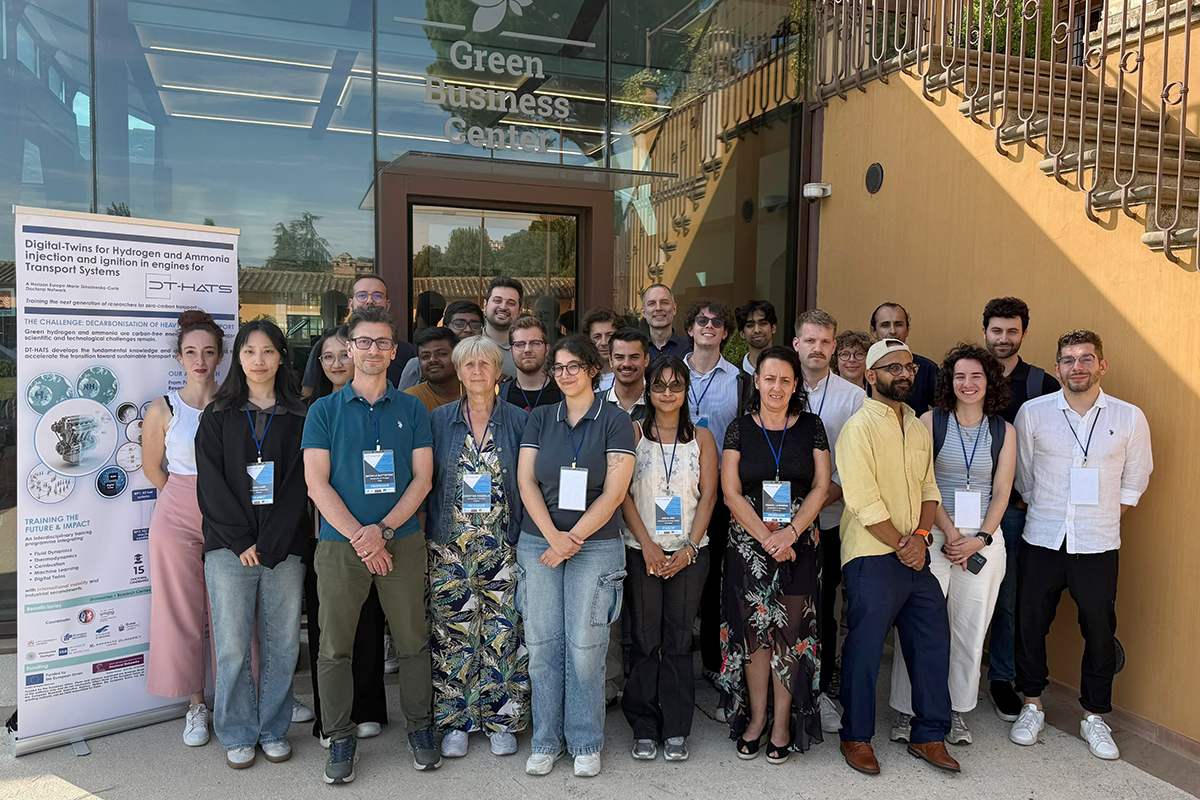
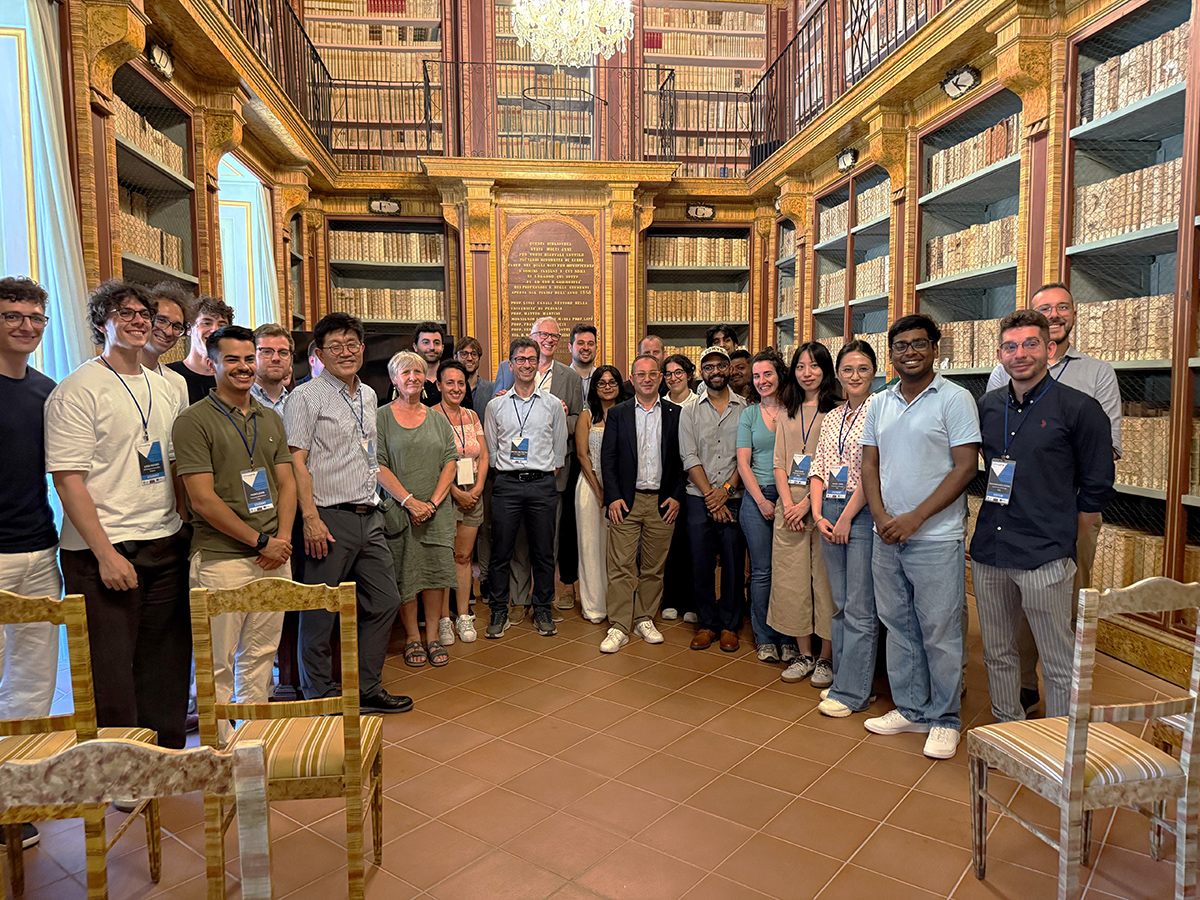
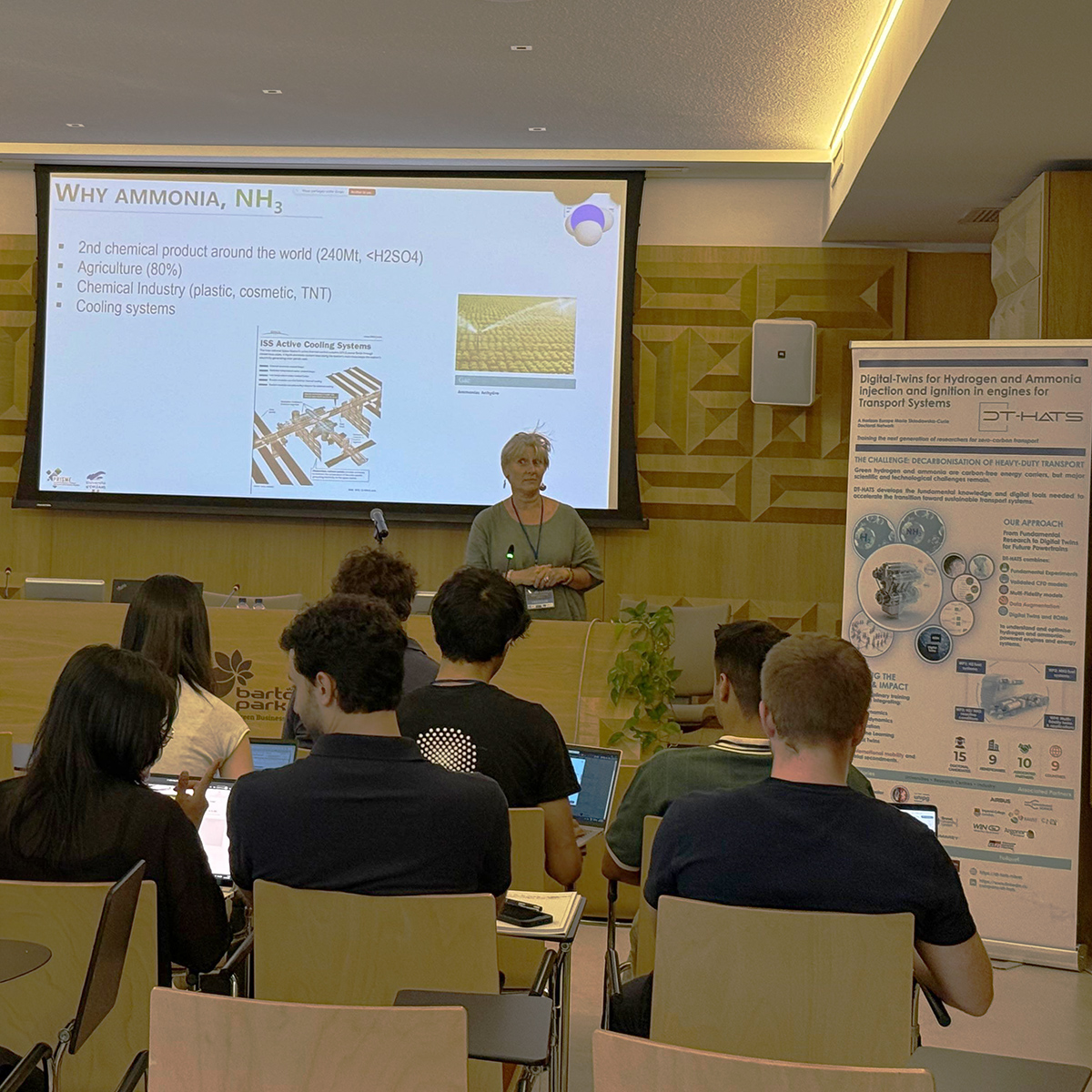
From 28 June to 3 July 2026, the DT-HATS community gathered in Perugia, Italy, for the project’s first Summer School. Hosted by the University of Perugia, the in-person event brought together more than 30 participants, including doctoral candidates (DCs), supervisors and partners from universities, research organisations and industry. Across five consecutive days, the programme combined scientific lectures, practical exercises, DCs’ presentations, poster discussions and social activities. In addition to developing participants’ knowledge and skills, the Summer School provided an important opportunity to explore the connections between the network’s different research themes and individual doctoral projects. As a central component of the DT-HATS doctoral training program, the Summer School supported the development of scientific, technical and transferable skills relevant to hydrogen- and ammonia-based technologies. The sessions covered combustion, multiphase flow, machine learning, experiments, reduced-order modelling and digital twins. This multidisciplinary programme was especially valuable for DCs whose research lies at the intersection of experimental, numerical and data-driven approaches.
Week in review
Monday: The scientific program opened with hydrogen engine technologies and combustion, led by Professor Hua Zhao and Professor Xinyan Wang of Brunel University London, followed by multiphase flow fundamentals and modelling with Professor Michele Battistoni of the University of Perugia. Two poster sessions gave the DCs an excellent opportunity to explain their research plans and start focused discussions with supervisors and peers.
“I really enjoyed presenting and discussing the posters with the other DCs. Learning more about each research topic was very interesting, as it highlighted potential areas for collaboration as well as the multi-disciplinary nature of the DT-HATS project,”
Lucrezia Carnà, DC5.
Tuesday: Professor Laura Mainini of Imperial College London introduced multi-fidelity active learning and its role in combining information from datasets with different levels of accuracy and computational cost. The afternoon sessions, led by Professor Christine Rousselle of the University of Orléans, focused on ammonia engine technologies and combustion, linking data-driven methods with one of the network’s central fuel pathways.
Wednesday: Training on turbulent combustion theory and modelling was delivered by Professor Hong G. Im of King Abdullah University of Science and Technology. Following a welcome address and visit to the Rectorate of the University of Perugia, the DCs presented project updates which opened the floor for valuable exchange with the DT-HATS partners. The day concluded with a guided tour of the beautiful historical city of Perugia.
Thursday: The program combined further turbulent combustion training with science communication sessions delivered by Joanna Plesniak and Dr Johannes Ripperger of accelopment Schweiz. Professor Manolis Gavaises of City St George’s, University of London, then led sessions on multiphase flow theory and modelling. Together, these activities encouraged participants to consider both the quality of their research and how complex technical work can be communicated clearly to different audiences.
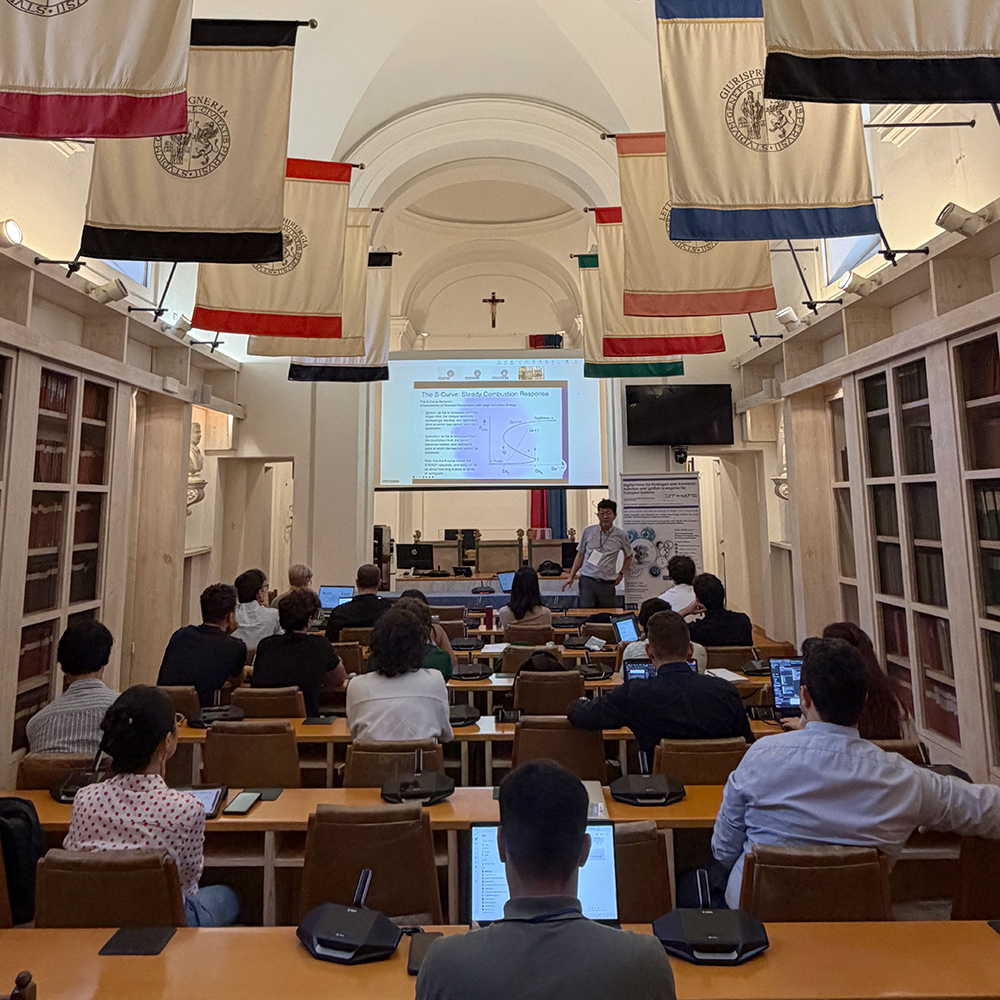
Friday: Professor Alberto Procacci of the Université libre de Bruxelles introduced reduced-order models and digital twins for reactive and turbulent flows, including a hands-on exercise. The Summer School closed with experimental sessions on multiphase and hydrogen flows led by Professor Grazia Lamanna and Julian Härter of the University of Stuttgart, connecting the week’s modelling topics with experimental methods and measurements.
“Attending the DT-HATS Summer School was a highly valuable experience. It provided an excellent opportunity to meet fellow researchers and experts from different institutions, exchange ideas, and discuss our research projects in a collaborative environment. In addition, the diverse program of lectures broadened my knowledge and provided valuable insights that will contribute to the development of my research project,”
Eirini Sotiria Kefaloukou, DC3
From individual projects to a shared research agenda
The poster sessions and project updates put DCs in the centre of the Summer School, transforming the programme into a two-way exchange rather than a sequence of lectures. By presenting their own work, the DCs were able to identify overlaps between projects, compare methods and receive input from specialists outside their immediate research teams. These exchanges also made the wider DT-HATS structure more tangible. They demonstrated how research spanning injection, combustion, experiments, numerical modelling, machine learning and digital twins contributes to the DT-HAT’s shared objectives. For many participants, the week was the first opportunity to meet the wider network in person after the virtual DCs’ introduction meeting earlier in the year. Informal conversations during coffee breaks, lunches and poster discussions helped turn introductions into emerging working relationships.
“The summer school reminded me that research is about more than scientific discoveries; it's also about the people you meet, the ideas you exchange, and the collaborations you build along the way,”
Arnob Kundu, DC7
Building connections beyond the lecture room
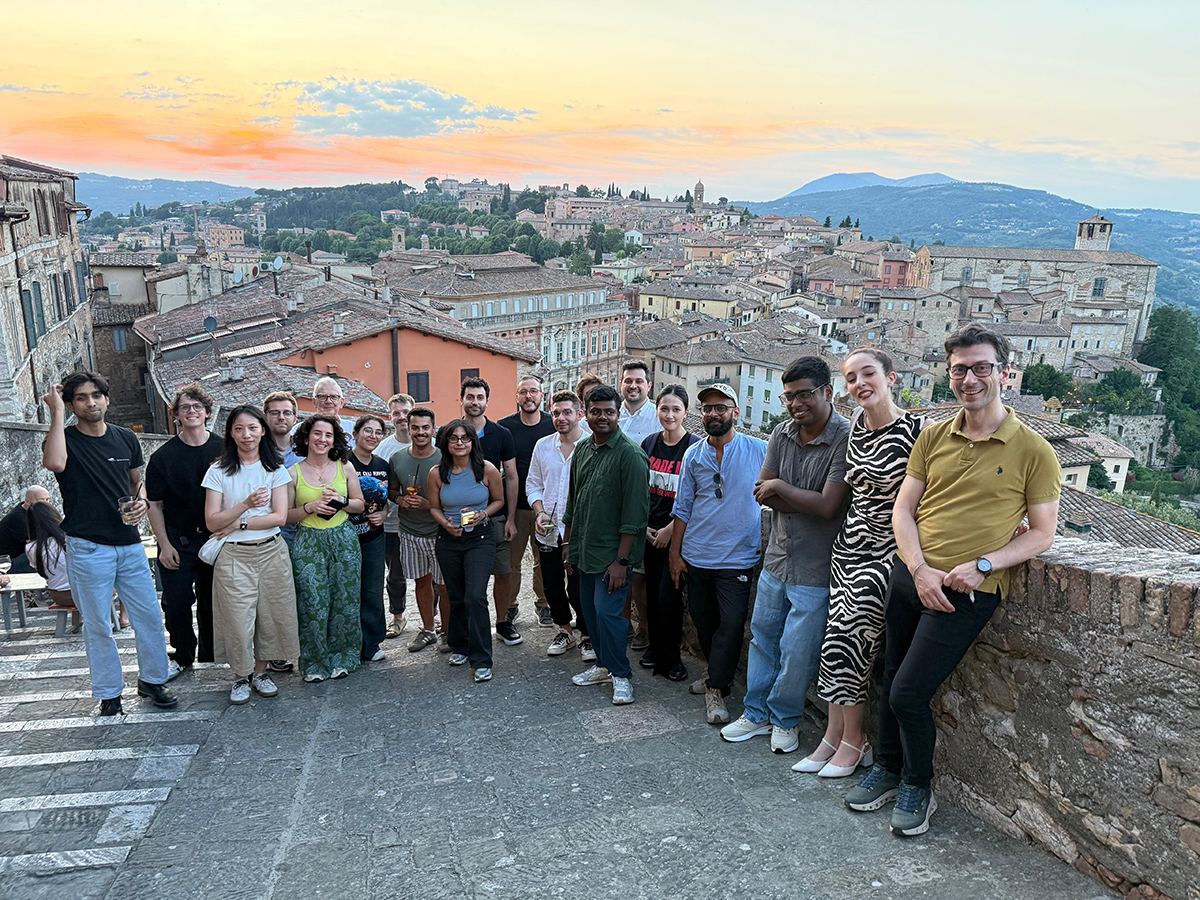
Networking continued through a welcome reception, an informal dinner, a tour of Perugia and the network dinner. These activities gave DCs, supervisors and partners time to discuss research interests and future collaboration in a less formal setting. For a network spanning several countries, institutions and disciplines, these personal connections are particularly important. They facilitate the exchange of expertise, make it easier for researchers to seek advice and support, and help participants recognise opportunities for collaboration as the individual projects progress. By the end of the week, participants had gained a broader technical perspective, direct feedback on their projects and a clearer understanding of how the different areas of DT-HATS complement one another. The Summer School therefore provided a shared scientific foundation and stronger relationships to support future training and collaboration.
“The DT-HATS Summer School was a fantastic opportunity to learn, collaborate, and meet inspiring people. I leave with new knowledge, fresh ideas, and lasting connections. The combination of excellent lectures, hands-on discussions, and networking made it an unforgettable experience that motivated me to continue exploring this exciting field,
Xiao Xiao, DC6
Learn more about the DT-HATS training program and follow the project on LinkedIn for future updates.
The news item was written by DT-HATS DC13 Disha Roy.
Click here to learn more.