
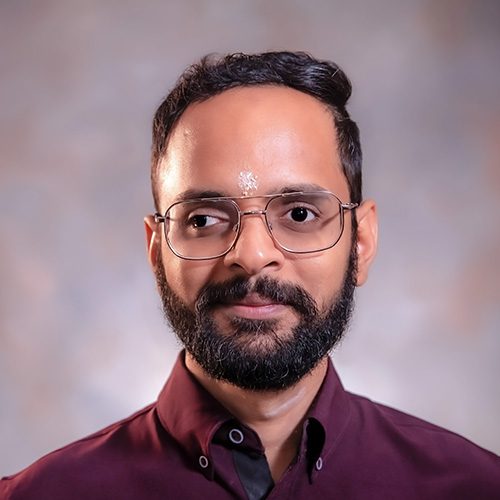
Pratik Tiwari
DC9: Ammonia flame propagation characteristics as a function of mixing process and hydrogen additions in optical engine
In this project, I will investigate ammonia internal combustion engine. The atomisation process, especially under flash-boiling conditions, affects local air-fuel mixing and therefore flame development.
Given the current lack of experimental data on ammonia flame visualisation, this work aims to generate insights that can improve the accuracy of CFD simulations.
I will carry out liquid NH3 injection measurements using optical techniques to implement in optical single-cylinder engine. The multi-hole GDi injector will be used, as previously implemented in metal engines. Quantification of the mixing state as a function of different injection strategies in non-reactive conditions will be analysed from diffuse back illumination images with high-speed camera. To characterise the mixing process as well as possible, LIF NH3 will also be developed. High-speed flame chemiluminescence and colour imaging with spectrometry will be used to extract species information and combustion process as a function of injection strategy and addition of H2 to identify ignition location and early flame propagation process.
Supervisor Prof. Christine Rousselle hosted by

1st secondment: industrial hosted by

About me
I obtained my Bachelor of Technology in Aerospace Engineering from SRM University, India. I later completed a Master of Engineering in Aerospace Propulsion Theory and Engineering at Nanjing University of Aeronautics and Astronautics, China, where my research focused on turbulent flow modelling using advanced CFD methods. More recently, I earned a Master of Science in Aerospace Engineering from the University of Tennessee Space Institute, USA, where I worked on experimental combustion research involving hydrogen and methane ignition using high-speed diagnostics such as chemiluminescence and Schlieren imaging.
Through my research and professional experience at Oregon State University, the University of Tennessee Space Institute, and IIT Madras, I have worked on propulsion systems, combustion diagnostics, and CFD modelling. My work integrates experimental testing, high-pressure combustion systems, and numerical analysis to understand complex reacting flows.
I aim to strengthen my interdisciplinary management and technology innovation skills, enabling me to bridge advanced engineering research with practical industrial applications and contribute to the development of sustainable energy and propulsion technologies.
Being part of an MSCA network is exciting as it brings together diverse expertise, collaboration, and innovation to tackle some of the most pressing energy challenges. I am driven by curiosity about combustion physics and the opportunity to develop technologies that make future energy systems cleaner and more efficient.