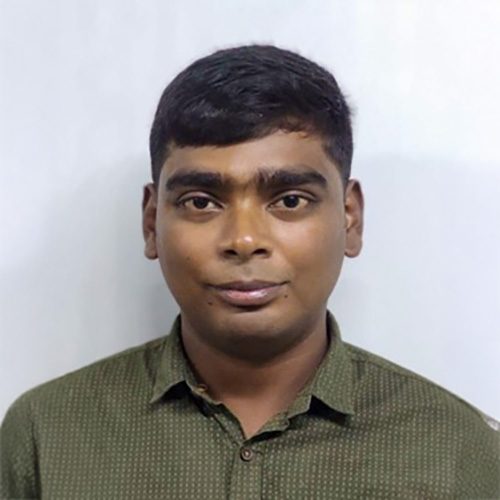
Arndo Kundu
DC7: Development of a model for H₂–NH₃ flash-boiling using a non-equilibrium approach with heterogeneous nucleation
Understanding and predicting the complex phenomena associated with H₂–NH₃ fuel mixtures can support the improved design of next-generation engines while reducing CO₂ emissions. My PhD focuses on developing a non-equilibrium model for H₂–NH₃ flash boiling that incorporates heterogeneous nucleation and ANN-based ammonia properties. RANS and LES numerical simulations will be performed under conditions relevant to direct-injection ammonia–hydrogen engines to predict hydrogen dispersion, and the results will be validated against experimental data.
Supervisor Prof. Michele Battistoni hosted by
1st secondment: industrial hosted by
About me
I completed a Master’s degree in Fluid Mechanics & Energetics at École Nationale Supérieure de l’Énergie, l’Eau et l’Environnement (ENSE3), Grenoble INP – Institut Polytechnique de Grenoble, France (2025), after pursuing a Master 1 in Applied Mechanics at Université Grenoble Alpes. Earlier, I obtained a Bachelor of Technology in Mechanical Engineering from APG Shimla University, India. My academic training focused on fluid mechanics, numerical simulation, and energy systems.
During my studies, I gained research experience through internships in both experimental and computational fluid dynamics. During a research internship at the Laboratoire des Écoulements Géophysiques et Industriels (LEGI), Grenoble, I carried out wind-tunnel experiments investigating the effect of water vapour fog on the cooling of a radiative surface. Later, during a CFD internship at CNRS-PROMES in Perpignan, I performed direct numerical simulations of anisothermal fluid–particle flows using the TrioCFD solver on the CEA-IRENE HPC cluster, focusing on heat transfer at fluid–particle interfaces.
Through the DT-HATS doctoral network, I aim to further develop expertise in multiphase flows, phase-change phenomena, and computational modelling, contributing to predictive models for complex fluid systems relevant to future low-carbon energy.
Along with raising awareness, research is one of the most powerful drivers of global CO₂ emission reduction. Through the DT-HATS MSCA network, I’m excited to collaborate globally, gain hands-on experience through secondments, and contribute to innovative solutions.