
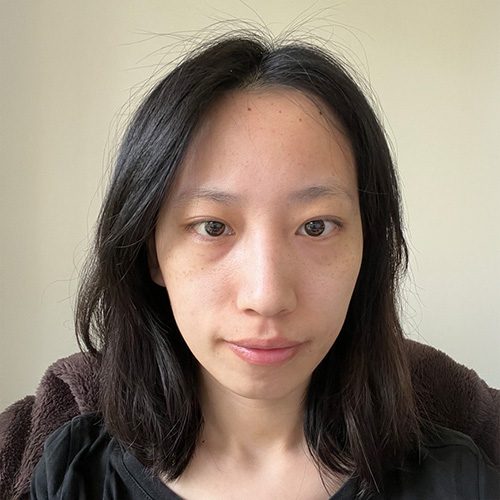
Xiao Xiao
DC6: Development of multicomponent real-fluid machine leaning (RFM-DAL) approach for LES of NH3-H2 injection and mixing
My doctoral research focuses on improving the efficiency of computational fluid dynamics (CFD) simulations for hydrogen–ammonia (H₂/NH₃) heavy-duty engines. Simulating these engines requires solving large systems of differential equations to compute thermodynamic properties of multi-species reacting mixtures, which results in very high computational cost. Conventional CFD approaches therefore rely on tabulation methods, where thermodynamic data are precomputed and stored in lookup tables to accelerate simulations. However, for combustion systems involving many chemical species, the dimensionality of these tables increases rapidly, making them impractical due to memory limitations.
My research addresses this challenge by replacing high-dimensional lookup tables with a deep-learning-based surrogate model. The model will learn thermodynamic relationships from precomputed datasets and provide fast property predictions during CFD runtime. Implemented within the CONVERGE CFD framework, this approach aims to maintain the accuracy of detailed thermodynamic models while drastically reducing computational cost, enabling efficient simulations of complex H₂/NH₃ combustion processes.
Supervisor Dr Habchi Chaouki hosted by

1st secondment: industrial hosted by
About me
My previous academic research focused on energy systems, where I applied deep learning to uncover complex patterns in data and combined statistical methods to evaluate the reliability of the results. This experience provided a strong foundation in data-driven modelling, analysis, and the development of AI approaches for scientific applications. I obtained my Bachelor’s degree in Electrical Engineering and my Master’s degree in Energy and Power Engineering in China.
I am particularly interested in designing reliable and interpretable AI4Science models for complex physical systems. Through the DT-HATS project, I aim to apply these skills to simulation and predictive modelling of hydrogen and ammonia engines, gaining experience in computational fluid dynamics, thermodynamics, and AI integration. DT-HATS offers a valuable opportunity to contribute to energy transition research while developing practical expertise in advanced modelling tools.
DT-HATS gives me the opportunity to combine AI, CFD, and thermodynamics in contributing to clean energy solutions, while learning from leading international experts.