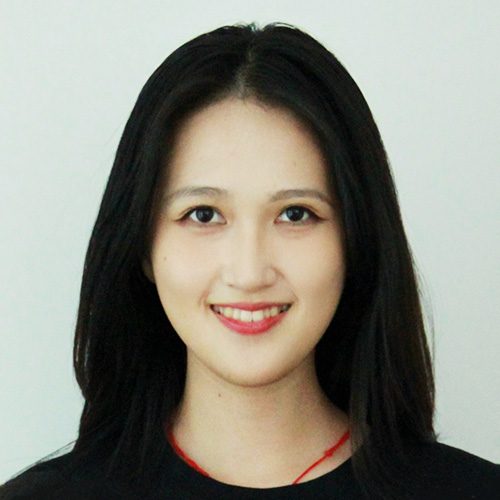
Yihan Yang
DC10: Development of a Low-Temperature Plasma Ignition Model for NH₃ and H₂
What if low-carbon fuels could be ignited more reliably and efficiently using plasma-assisted combustion? This project aims to explore the fundamental mechanisms of plasma-assisted ignition in ammonia-hydrogen fuel blends through detailed kinetic modelling and numerical simulations.
My doctoral research will focus on integrating plasma chemistry and combustion kinetics to better understand the ignition phase of NH₃/H₂ mixtures. Detailed reaction mechanisms and electron-impact cross-section data will be collected and adapted for plasma-combustion simulations. These mechanisms will be used to analyse key reaction pathways and characterize plasma properties.
The resulting plasma-assisted ignition model will then be integrated into RANS simulations to investigate ignition and mixing processes under engine-relevant conditions. The simulations will be used to study the influence of NH₃ injection strategies on ignition behaviour. The goal is to improve understanding of plasma-assisted ignition mechanisms and contribute to the development of efficient low-emission combustion technologies for future energy systems.
Supervisor Prof. Michele Battistoni hosted by
1st secondment: industrial hosted by
About me
I obtained my Master’s degree in Aircraft Engines from Moscow Aviation Institute in 2025. During my studies, I focused on combustion science and computational fluid dynamics (CFD), with a particular interest in low-emission combustion technologies.
My Master’s thesis investigated nitrogen oxide (NOₓ) formation in methane-hydrogen combustion using numerical simulations and orthogonal experimental design methods. Through this research, I gained experience with numerical simulation, combustion modelling, and the analysis of chemical reaction mechanisms in reactive flows.
Within the doctoral network, I aim to expand my expertise toward plasma-assisted combustion and numerical modelling of reactive flows using detailed chemical kinetics and CFD simulations. I am particularly interested in understanding plasma-chemistry interactions and their role in improving ignition and combustion performance of low-carbon fuels such as ammonia and hydrogen. I aim to contribute to the development of innovative combustion technologies that support cleaner and more sustainable energy systems.
I am excited to join the DT-HATS doctoral network and contribute to research on sustainable combustion technologies. Being part of an international MSCA program offers a unique opportunity to collaborate across disciplines and develop innovative solutions for cleaner energy systems.